
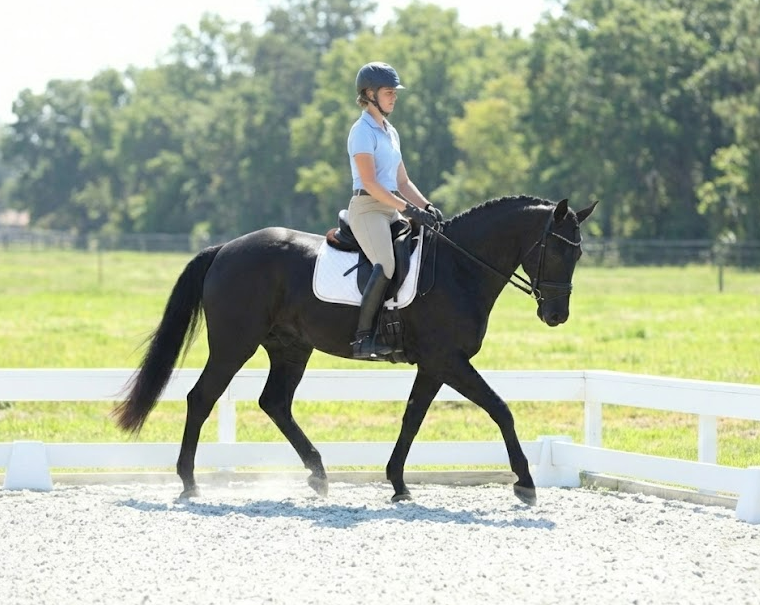
Ask some riders to ride a corner and they'll either cut it short, let the horse fall in, or lean into the turn like they're on a motorcycle. Teaching proper corner technique is one of those foundational skills that fixes so many other problems and many students have never been taught to actually think about what their body is doing through a turn.
Here's how to break it down...
WHY THIS MATTERS
When students ride corners incorrectly, the horse:
- Falls in on the inside shoulder
- Loses balance and rhythm
- Drifts off track
- Builds bad habits that carry into every circle, turn, and pattern
Fix the corners and you fix a lot of other problems automatically.
THE CORE TECHNIQUE: WHAT TO TEACH
Before sending students into corners, make sure they understand what their body should actually be doing.
Weight Distribution:
"More weight into your outside seat bone - think about sinking into that outside stirrup without actually leaning. Your inside seat bone stays forward and light."
Why it matters: Weighting the outside prevents the horse from falling in on the inside shoulder. Light inside seat bone keeps you from loading that shoulder down.
Outside Leg:
"Slide your outside leg slightly behind your hip."
Why it matters: Keeps the hindquarters from swinging out and maintains straightness through the turn.
Inside Leg:
"Long inside leg at the girth."
Why it matters: Provides lateral support and encourages the horse to bend correctly around your leg rather than just falling through the corner.
Inside Hand:
"Slightly elevated - not pulling back, just a slight upward inclination."
Why it matters: Creates appropriate flexion without blocking forward movement.
Position Checkpoints to Coach Through:
- Vertical posture - no leaning into the turn
- Shoulders level and square
- Head straight and centered
- Even elbow position at sides
HOW TO TEACH IT: STEP BY STEP
Step 1: Explain at halt first. Don't send them into a corner and hope for the best. Explain what their body should be doing BEFORE they try it. Walk through each position point:
- Outside seat bone weighted
- Inside seat bone light and forward
- Outside leg back
- Inside leg at girth
- Inside hand slightly elevated
- Staying vertical - no leaning
Have them set up the position at halt so they can feel it before adding movement.
Step 2: Walk the corners. Start at walk and have them ride each corner focusing on one thing first such as weight distribution. "Feel your outside seat bone get heavy as you approach the corner."
Once that's consistent, add the next element. Don't try to correct everything at once - pick one thing, get it right, then add another.
Step 3: Both directions equally. Most riders and horses are stiffer one way than the other. Ride corners tracking left AND right equally. Track which direction is weaker for each student and spend more time there without making it obvious.
Step 4: Progress to circles. Once corners are consistently correct, move to circles. The same principles apply but require continuous maintenance instead of just four corners.
CIRCLE PROGRESSIONS:
20-Meter Circles (Start Here): Large circles establish technique without demanding too much precision.
"Pick a focal point in the center of your circle. Ride around it maintaining consistent bend and balance throughout."
Focus on: Consistent bend, outside seat bone weighted throughout, horse not falling in
15-Meter Circles (Intermediate): Once 20-meter circles are consistently correct, shrink it. More difficult to maintain technique on smaller circles so students have to work harder to maintain bend and balance.
Use: Arena letters, cones, or focal points as circle centers
10-Meter Circles (Advanced): This is where technique really gets tested. Requires precise position control and well-established muscle memory.
Use cones, poles, or arena letters as center points. Students have to really commit to outside seat bone weighting and inside leg support.
VARIATIONS TO KEEP IT INTERESTING:
Focal Point Exercises: Set up cones, use dressage letters, or use jump standards as circle centers. Giving students a specific point to circle around dramatically improves accuracy as suddenly they can see if they're drifting. Great for all levels - just adjust circle size accordingly.
Pattern Combinations: Once corners and circles are solid individually, combine them:
Corner to Circle: Ride a corner, transition into a 20-meter circle, return to corner work. Maintain consistent technique throughout the transition.
Figure Eights: Connect circles in both directions. Challenges weight distribution changes between directions. Great for identifying which direction is weaker.
Serpentines: Incorporate corner technique into serpentines for multiple direction changes with consistent position. Advanced balance and coordination work.
Gait Progressions
Walk: Always establish here first. Build muscle memory before adding speed.
Trot: Apply the same technique at trot. Students have to maintain position while managing the increased movement. Coach through posting and sitting trot.
Canter: Advanced riders only. Maintain proper corner technique while managing lead changes. Focus on balance throughout gait transitions.
ADAPTING FOR DIFFERENT LEVELS:
Beginners:
- Walk only in large arena corners
- One technique element at a time
- Frequent position reminders
- Lots of encouragement - this is harder than it looks
- "Feel your outside seat bone get heavy" before they even start the corner
Intermediate:
- Add trot work and medium circles
- Challenge with different focal points and patterns
- Start building independence - "what did you feel there?"
- Introduce self-correction: "Did that feel right to you? What could you change?"
Advanced:
- Canter work and complex combinations
- Focus on automatic responses
- Minimal reminders - they should be self-correcting
- Competition-level precision requirements
VERBAL CUES THAT ACTUALLY WORK:
Use these:
- "Outside seat bone heavy, inside seat bone light"
- "Step into the outside stirrup without leaning"
- "Inside leg long at the girth"
- "Stay vertical - don't lean into the turn"
- "Feel the horse balance through that corner"
HOW TO KNOW IT'S WORKING:
You're looking for:
From the horse:
- Stays balanced through turns without falling in
- Maintains rhythm and tempo through corners
- Bends correctly without drifting
From the rider:
- Consistent weight distribution both directions
- Vertical posture through turns (no motorcycle lean)
- Smooth flowing movement through directional changes
- Starting to self-correct without reminders
The real test: Can they maintain correct technique on a horse they've never ridden before? That's when you know it's genuinely in their body and not just habit on their usual horse.
COMMON PROBLEMS AND FIXES:
Problem: Student leans into the turn
What you see: Shoulder drops inside, weight shifts wrong direction
Fix: "Imagine there's a wall on your inside - you can't lean into it. Weight goes OUTSIDE not inside."
Problem: Horse falling in on inside shoulder
What you see: Horse drifts inward, loses shape of circle
Fix: "Your inside seat bone is too heavy - lighten it. More weight outside."
Problem: Outside leg creeping forward
What you see: Hindquarters swinging out, losing bend
Fix: "Slide that outside leg back behind your hip and keep it there through the whole corner."
Problem: Inside hand pulling back instead of slightly up
What you see: Horse overbent at neck, losing forward movement
Fix: "Think UP not back with that inside hand. You want flexion not resistance."
Corners seem simple but they're not. Most students have been riding corners incorrectly for years and don't even know it because nobody ever broke down the mechanics.
Teaching this systematically - walk first, one element at a time, both directions equally, progressing through circles and patterns creates riders who understand how to balance through turns instead of just winging it. The payoff for correct corners can be seen everywhere: better circles, better jumping lines, better dressage figures, better trail riding.
Try this next lesson: Before doing anything else, ask your student to ride a corner and just WATCH what their body does. No correction yet - just observe. Then explain the technique and have them do it again. The difference will be immediate and obvious. That's your teaching moment right there.

Want More Lesson Plans?
Stop spending hours creating lesson plans from scratch! Our massive online library gives you proven exercises for any rider, any discipline, any weather. Group lessons, private lessons, activities, games, warm-ups - it's all here.
Get instant access to 1,000+ lesson plans →