
See What's Inside Our Riding Lesson Plan Library
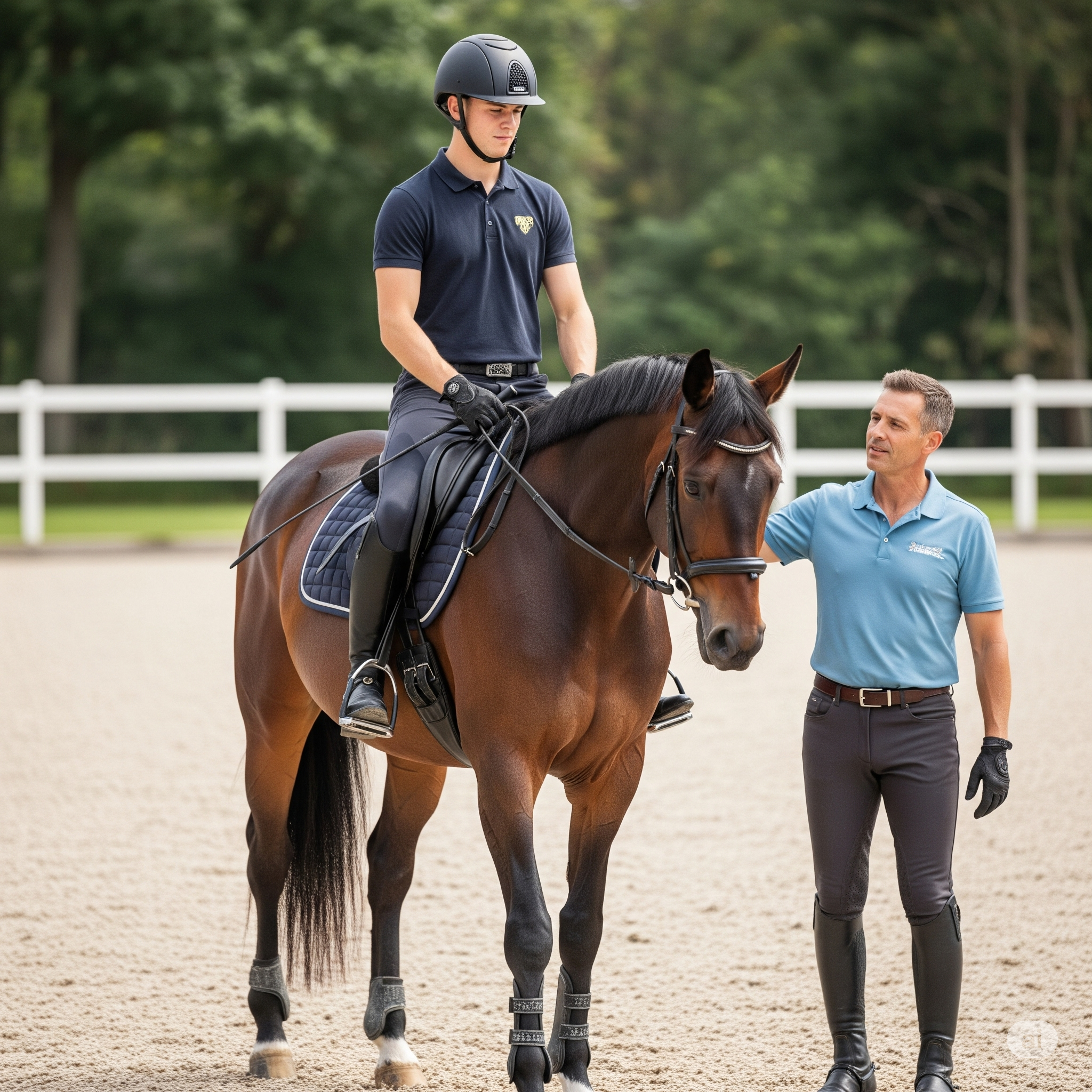
See why 5,000+ instructors love our lesson plans! Here's a small sample from our library of exercises:
Counting Strides on a Circle Over Ground Poles or Jumps
This exercise helps to develop rhythm awareness, stride adjustability, and feel that separates good riders from great riders. Set up two poles opposite each other on a circle, count strides between them and work toward consistent counts. Then progress to intentionally changing stride counts through lengthening or shortening. Builds skills essential for jumping distances, dressage adjustability, and general horsemanship.

8 Winter Riding Lesson Ideas That Build Skills
Winter doesn't have to mean boring arena circles until spring! With the right activities, you can actually use the slower season to build real skills. Here are some of the best winter lesson ideas that keep students engaged while developing real riding skills.
12 Exercises for Developing Leg Stability: Building a Secure, Independent Position
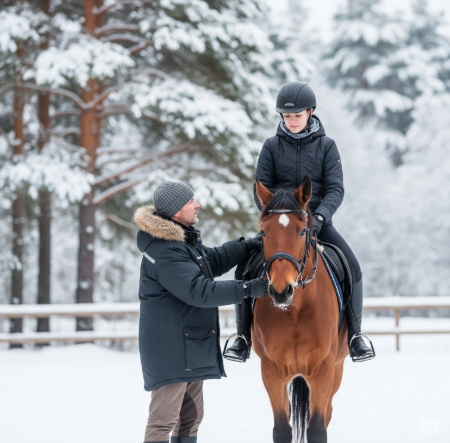
Leg stability doesn't develop from telling students to stop gripping or push their heels down. It develops from systematic exercises that build awareness, muscle memory, and genuine balance over time. These twelve exercises give you tools for every level and every learning style. Pick the ones that address your student's specific weaknesses. The riders who come out the other side of this work have genuine independent legs and not just heels-down compliance.

Mounted & Unmounted Exercises to Improve the Rider’s Seat
Help your riders develop an independent seat by combining unmounted and mounted exercises rather than hoping students "figure it out" through saddle time. Start with unmounted seat bone awareness work and core strengthening exercises to build proprioceptive awareness before applying it mounted. Progress through no-stirrup work and add position variations like jockey seat and standing in stirrups to build versatility and strength.

No-Stirrup Exercise Progression Guide
No-stirrup work is essential for developing an independent seat. This free, fully editable template guide provides a 10-level system that takes riders from basic walk exercises through advanced canter work without stirrups. Whether your students are working toward their first sitting trot or preparing to school lateral movements stirrup-free, this resource gives them and you a structured roadmap. The template covers everything from foundation balance work through mastery level patterns and includes guidance on both one-stirrup and two-stirrup approaches to suit different learning styles.
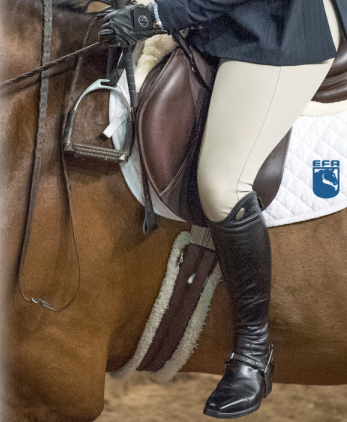
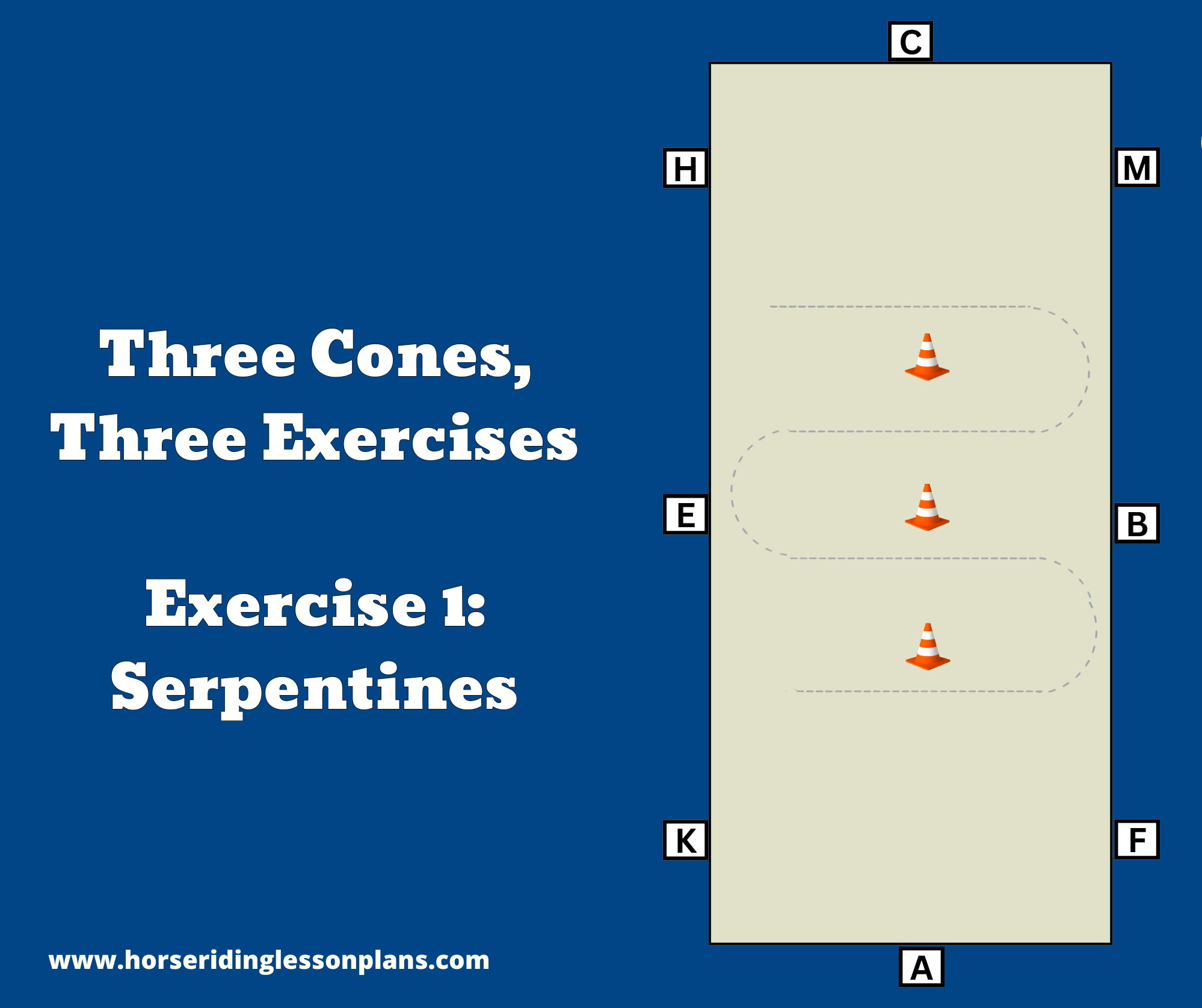
Three Cones, Three Exercises: Serpentines, Weaving, & Leg Yielding
Three cones in the middle of your arena create the foundation for three completely different exercises from serpentines for straightness and accuracy, weaving for strength and flexibility, and leg yield for suppleness and responsiveness. One simple setup, three comprehensive training patterns.
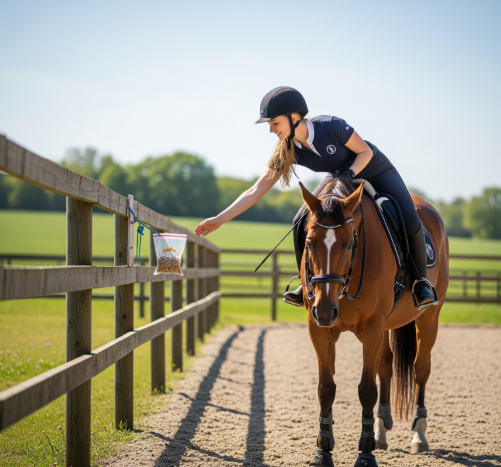
Horse Treat Scavenger Hunt
This treat collection steering game is a competitive warm-up activity that builds navigation skills while keeping students highly engaged. This activity helps to build steering precision, balance, spatial awareness, and horse control.
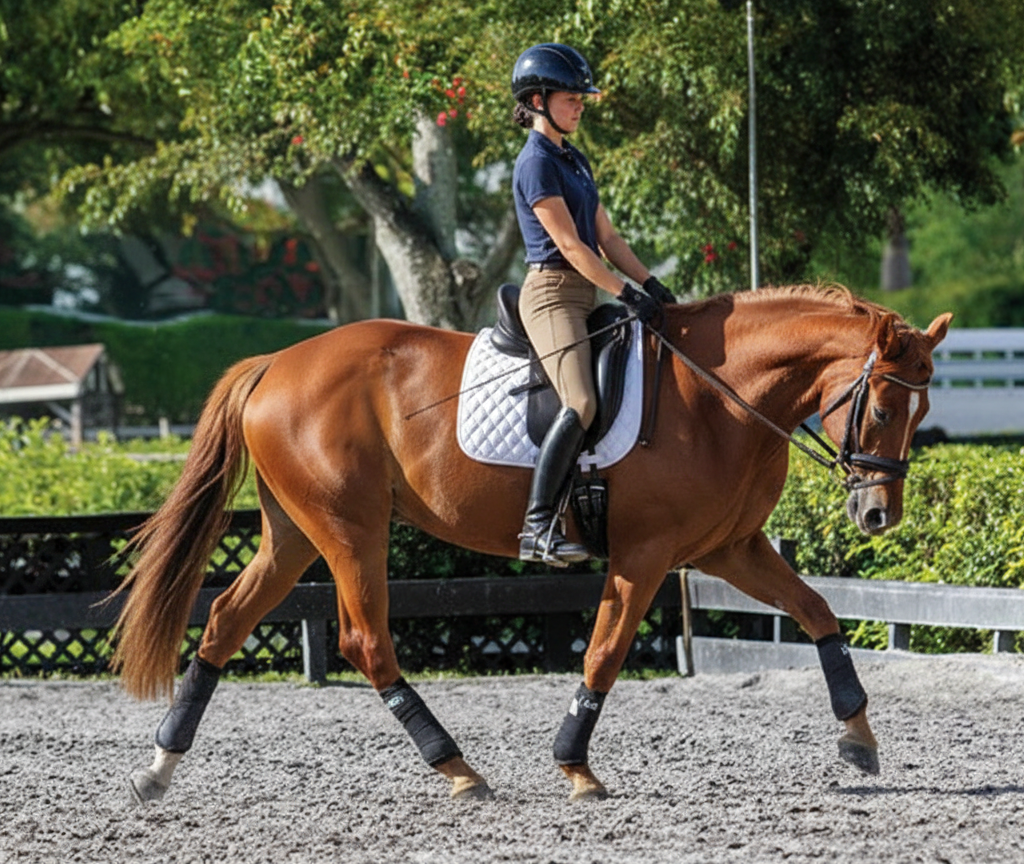
Teaching Rising Trot Biomechanics: A Better Way to Develop Proper Posting
The key to proper rising trot mechanics is thigh rotation - as riders rise, their thighs rotate from flat (kneecaps forward) to vertical (kneecaps pointing down), with the lower third of the thigh providing leverage while knees stay glued to the saddle as the fulcrum. This exercise is to develop riders with genuine biomechanical mastery who can post effortlessly without stirrups, rather than creating compensatory patterns that limit their advancement and cause fatigue for both horse and rider.
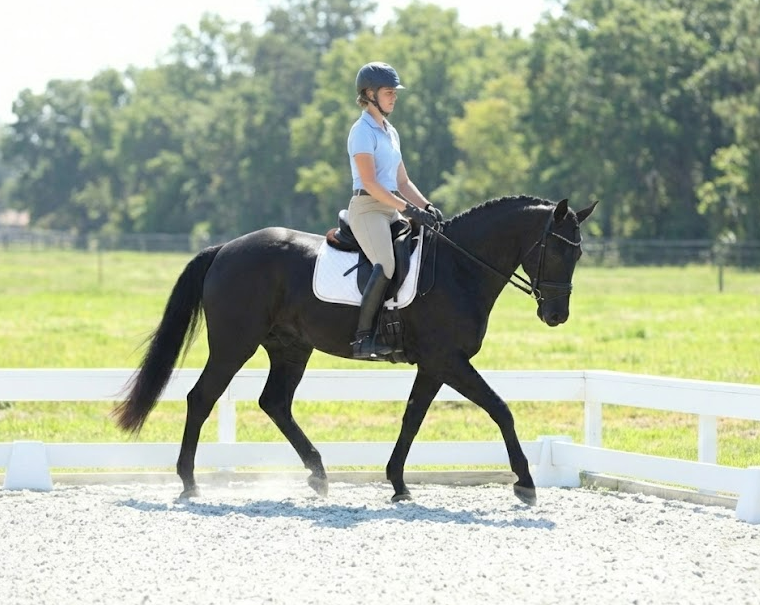
"L" Pole Chute
This exercise uses four ground poles arranged to create a narrow corridor that riders navigate through without touching the poles, building steering precision and spatial awareness through adjustable difficulty. Start with a wide chute then progressively narrow the passage as steering accuracy improves. The exercise begins at walk, advances to trot, and offers multiple variations including backing through the chute, a "shrinking chute game", lateral side-pass work over the poles, and eventually canter navigation for experienced pairs.

Riding Correct Corners
When students ride corners incorrectly the horse falls in on the inside shoulder, loses balance, and builds bad habits that carry into every circle, turn, and pattern they ride. When students genuinely master correct corners, you'll see it everywhere - better circles, better jumping lines, better dressage figures, because balanced corners are the foundation of balanced riding.
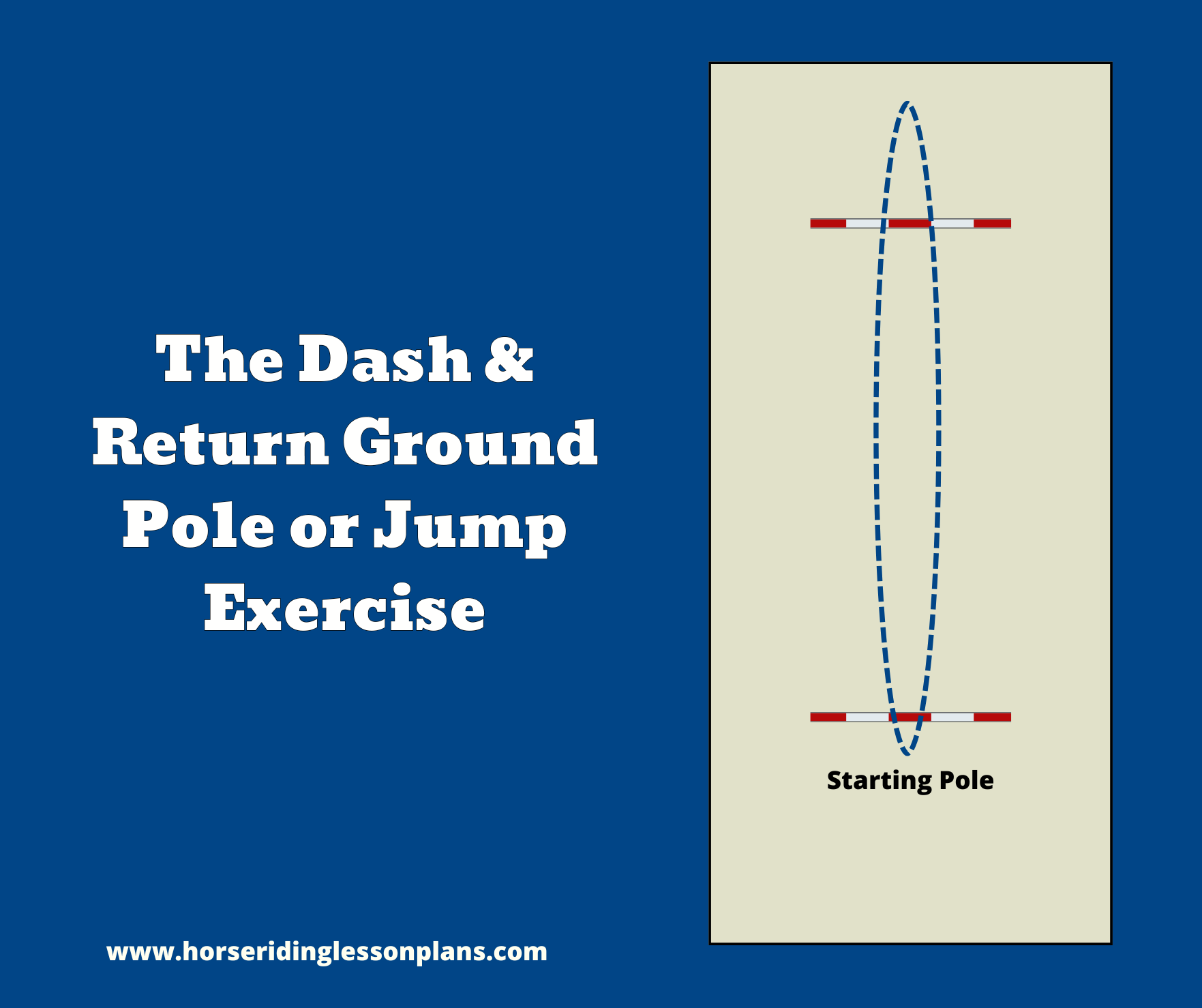
The Dash & Return Ground Pole or Jump
Exercise
Using two ground poles, cross-rails, or verticals at opposite ends of your arena, this exercise challenges riders to cross the first obstacle, ride a straight line to the second obstacle, execute a turn, and return back over the first. The turn is the technical heart of the exercise, teaching riders the critical "push don't pull" principle: inside leg actively pushing into the turn rather than yanking the inside rein, which kills momentum and creates unbalanced, resistant turns. The exercise scales from beginner walk work through advanced jumping combinations and becomes genuinely competitive through two formats - a finesse judging version where turns, approaches, rhythm, and harmony are scored on technique, or a timed speed version where riders discover that correct technique and fast turns are actually the same thing, making it one of the most effective tools for teaching proper turn aids across any riding discipline.
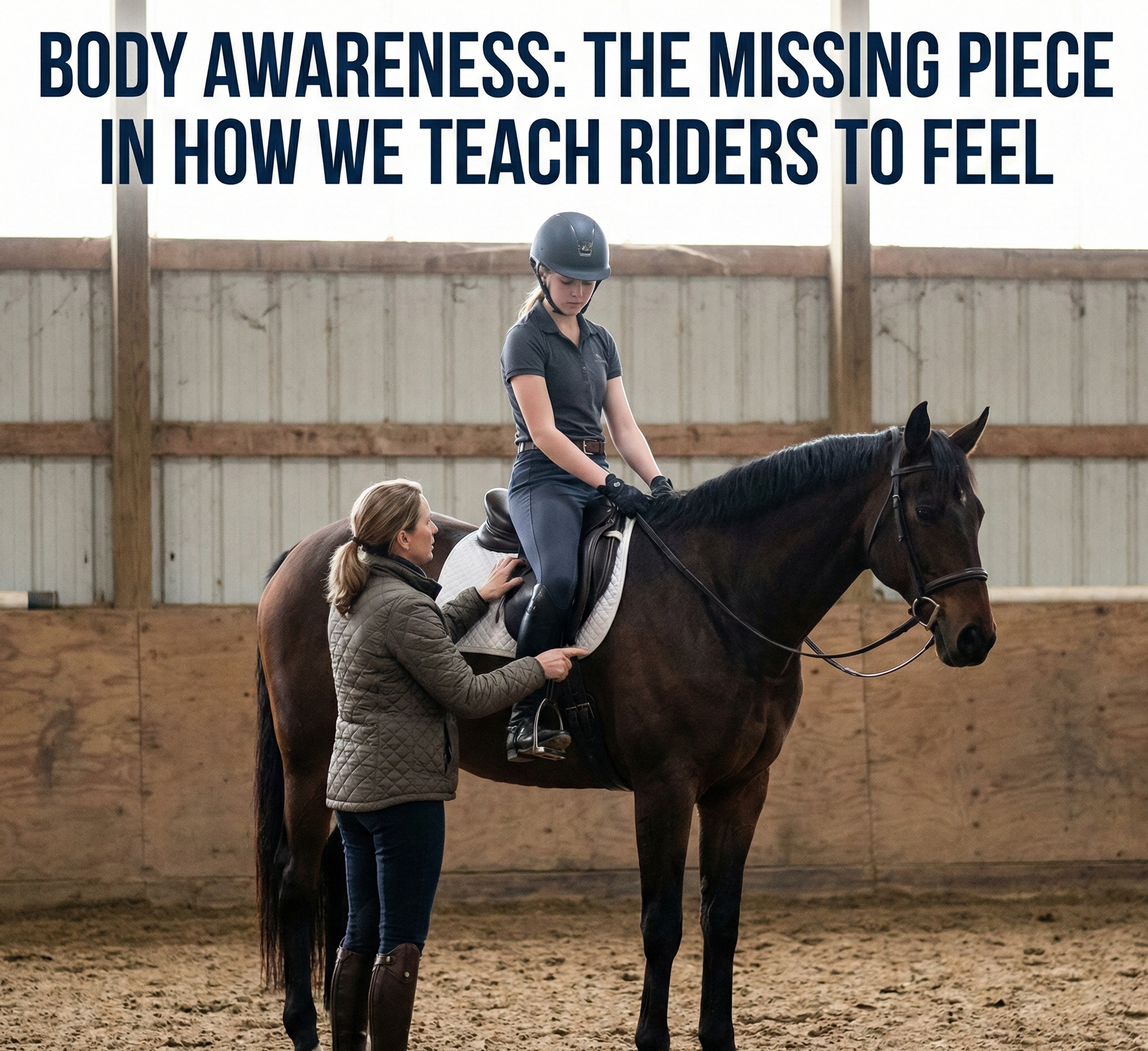
Body Awareness: The Missing Piece in How We Teach Riders to Feel
Body awareness in riding isn't about correcting what students are doing wrong - it's about replacing unhelpful tension patterns with better ones. Every tension pattern in your student's body exists because their nervous system developed it for a reason. Instead of correction, offer a replacement pattern such as the soup bowl pelvis imagery for a student with lower back tension, three points of contact for a student who can't find their seat, deliberate exhaling for a student who braces through difficult moments. The reason softness matters isn't aesthetic or traditional - it's physiological. A rider carrying tension through force cannot feel subtle communication from their horse, the same way someone holding a heavy bag of grain can't feel a feather placed on top. Teach your students to find neutral first, return to it often, and use breath as their reset button, and you'll develop riders with genuine feel rather than riders who comply with corrections temporarily and revert the moment they stop thinking about it.
Subscribe to our free newsletter...
For more lesson ideas and business tips for your equestrian business
© 2026, Horse Riding Lesson Plans & Summer Camp Curriculum I I